

Fix Dog Bad Breath: Causes & 5 Effective Steps to Eliminate Pet Bad Breath

Fix Dog Bad Breath (Halitosis) — What Pet Owners Need to Know
If your dog or cat’s breath makes you back away, you’re not alone. You’ve probably already tried everything: Greenies, Whimzees, water additives, or those “enzymatic” dental rinses that promise instant freshness. Maybe even milk bones (which can actually make things worse).
The truth is, bad breath in dogs and cats is almost always caused by bacteria that thrive on leftover food particles and plaque in the mouth. As that bacteria multiplies, it releases sulfur-based compounds — the real culprits behind that unpleasant smell.
Ignoring bad breath doesn’t just mean living with stinky kisses. Over time, poor oral hygiene can lead to periodontal disease, a painful and progressive condition that affects the gums, teeth, and even internal organs. In fact, bacteria from the mouth can enter the bloodstream and contribute to heart, kidney, and liver issues. According to the American Veterinary Dental Society, most dogs and cats show signs of dental disease by age three. (This is probably likely if pets are on kibble and not brushed).

The good news? You can take simple, natural steps to fix your pet’s bad breath. Below, we share:
- 5 easy ways to improve your pet’s dental hygiene at home
- Whole-food feeding tips for fresher breath
- And how to spot when bad breath is more than just a dental issue
Because your pet’s breath shouldn’t keep you from getting close — it should just be another sign of their overall wellness and vitality.
What Causes Dog or Cat Bad Breath?
When it comes to bad breath in pets, the causes aren’t that different from what affects us — minus the coffee, wine, or cigarette habits (we hope).
For dogs and cats, bad breath happens when bacteria break down food particles in and around the teeth. Over time, this buildup turns into plaque and tartar, creating the perfect environment for odor-causing bacteria to thrive.
Here are the most common causes of dog and cat bad breath:
- Pet food buildup — leftover bits of food get trapped between teeth and along the gumline, where bacteria multiply.
- Poor dental hygiene — not brushing regularly or skipping dental chews allows plaque to harden into tartar.
- Mouth infections or disease — tooth decay, gum inflammation, or periodontal disease are major contributors to halitosis.
- Other health issues — bad breath can sometimes be a sign of something deeper, such as kidney disease, diabetes, acid reflux, or even oral cancer. If your pet’s bad breath does not seem to be from the teeth or plaque build up, schedule an appointment with your vet to investigate your pet’s health either through bloodwork and/or x-ray.
When you think about it, it’s strange how we view pet dental care so differently from our own — yet the same principles apply. Regular cleaning, better food choices, and preventive care can go a long way toward keeping both dogs and cats healthy from mouth to tail.
Myth vs. Reality: The “Quick Fixes” That Don’t Actually Fix Pet Bad Breath
Let’s be honest — brushing someone else’s teeth isn’t anyone’s idea of fun, especially when that “someone” has fur and opinions about it. But that’s one big reason many of us treat our dog’s or cat’s dental care differently from our own.
Because brushing can be tricky (and time-consuming), the pet industry has made it very easy to believe that we can skip it altogether. We’ve been told that kibble cleans teeth, that treats like Greenies or Milk Bones freshen breath, or that a water additive or spray can magically wipe away bacteria.
In reality, most of these products are short-term fixes that mask odor without addressing the real cause which is plaque and bacteria buildup. Over time, that buildup leads to tartar, gum disease, and yes… more bad breath.
The takeaway? There’s no true “set it and forget it” solution for pet dental health. The best defense is still a mix of good diet, mechanical cleaning, and targeted natural support (like dental gels or raw meaty bones when appropriate).
Myth 1: Kibble Cleans Your Dog’s or Cat’s Teeth
One of the biggest myths in pet care is that kibble helps clean your pet’s teeth. It’s an idea that caught on easily — after all, it sounds great to think a food could double as a toothbrush. But let’s be honest: that’s a little like saying eating crackers will clean your teeth.
Kibble may scrape a bit of plaque on the surface, but it does nothing to remove the bacteria hiding below the gumline, where periodontal disease starts. The gumline is the most important area to keep clean and kibble just can’t get there. In addition, depending on the type of dog or cat you have, some do not chew but mostly swallow their meals if they are eager so no mechanical chewing to brush teeth.
Even worse, most kibble contains a high percentage of carbohydrates, which break down into sugars that feed oral bacteria. More bacteria = more plaque = more bad breath (and potential dental disease).
So while kibble is convenient, it’s not a dental solution.
Study: Is Raw Dog Food or Kibble Better for Pet Dental Health?
A veterinarian decided to put this debate to the test — can kibble really keep a dog’s teeth clean, or does raw feeding make a difference?
In a small study featuring 4 dogs, the same dog was fed a raw diet and later switched to kibble for 17 days. The results? The teeth difference on kibble was visible by day 8.
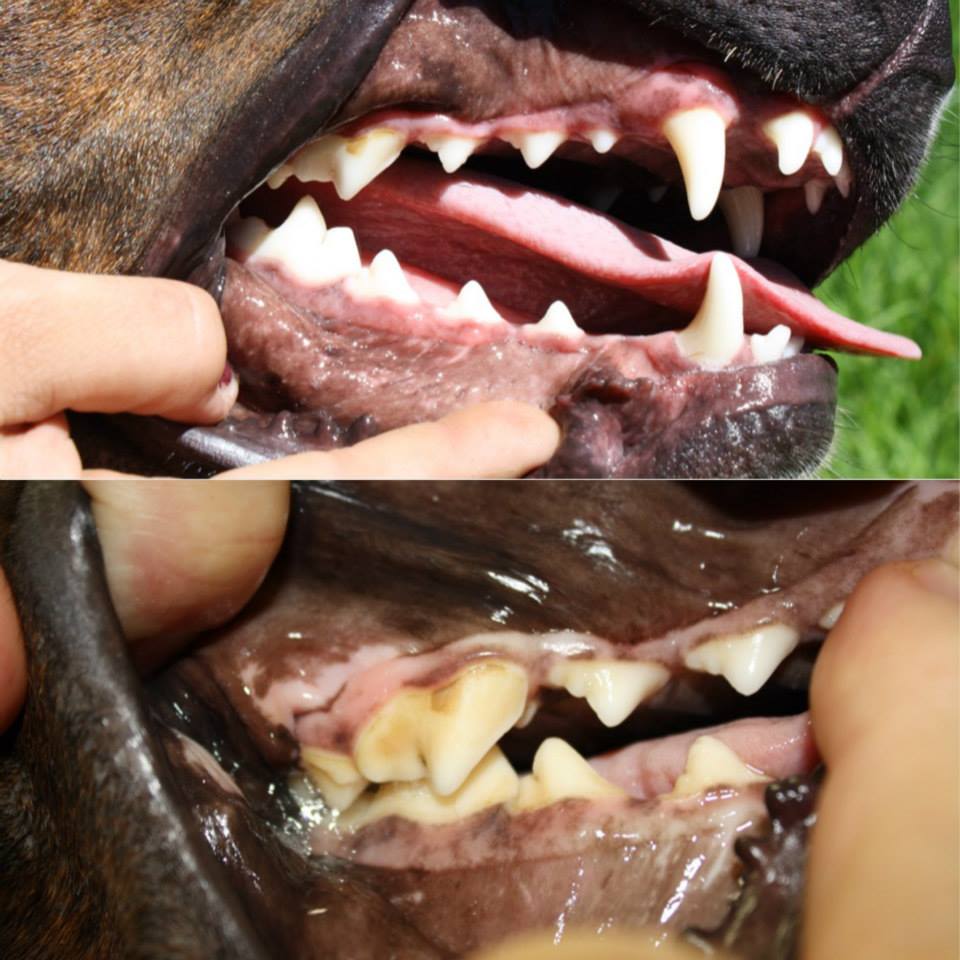
In the photo from that experiment, the top image shows the dog’s teeth while on a raw bones — cleaner and less plaque buildup. The bottom image shows the same dog after being switched to kibble, where noticeable tartar and discoloration occurred.
See the link here for a video of his experiment.
While it’s a small sample, the results echo what many holistic vets and pet parents observe: raw diets that include chewing on raw meaty bones naturally help clean teeth and reduce plaque, whereas kibble tends to do the opposite over time.
Myth 2: Dogs or Cats Eating Wet Food Have Pet Bad Breath Compared to Kibble Eaters
Many pet owners believe that wet food causes bad breath because it’s “sticky,” while dry, crunchy kibble somehow scrapes teeth clean. But that’s actually a false premise.
Here’s the truth: when your dog or cat drinks water (as they should with any meal), wet food is far less likely to cling to the teeth than dry food. Kibble tends to shatter into tiny, starchy crumbs that lodge between teeth and gums — exactly where bacteria thrive.
As WebMD explains, “Water helps flush away the food particles bacteria feed upon and promotes saliva production, which naturally cleans the mouth.”
Think about it this way: eat a handful of dry crackers and drink water, then try something soft and moist with water. Which one sticks between your teeth more? Exactly — the dry stuff.
So, while wet food often gets blamed for bad breath, it’s not as much of a culprit as the leftover carbs from dry food are.
Pro Tip– Always have fresh water available to encourage your pet to drink water after meals—it’s the simplest natural mouth rinse.
Myth 3: Enzymatic Gels, Drinking Water and Chewing Greenies/ Milk Bones Help
There’s no shortage of “quick fixes” promising fresher pet breath — from enzymatic sprays to minty water additives and chew treats. But do they actually work? Let’s break it down:
| Product Type | Our Take | Why It Falls Short |
|---|---|---|
| Enzymatic sprays/gels | Mixed results | Some may reduce surface bacteria, but evidence is limited and effectiveness varies by formulation. |
| Water additives | Mostly gimmicky | They may mask odor temporarily but rarely target the plaque-causing bacteria under the gumline. |
| Greenies / Whimzees | Debatable | Often high in carbs (which convert to sugar), and while they offer some abrasion, they can feed the same bacteria causing bad breath. |
| Milk Bones | Same problem | Processed carbs and questionable ingredients. More likely to contribute to dental issues than prevent them. |
Here’s the science: carbohydrates break down into sugars, which oral bacteria love to eat. These bacteria then release acids that erode enamel and lower the mouth’s pH — creating a perfect environment for plaque and bad breath. Without brushing or proper mechanical cleaning, those acids stay active and cause further decay.
So while these products might freshen breath for a few hours, they don’t actually solve the problem. If they did, we humans could just skip brushing and chew crackers instead.
We do carry ProDen PlaqueOff Chews at Moonlight Natural Pet Store (Vancouver) not because it’s a miracle cure, but because it’s a gentler, more natural option for pet parents seeking an easier routine. Think of it as a support tool, not a replacement for brushing, chewing, or diet-based care.

Why Does the Veterinary Oral Health Council Approve Certain Kibble and Chews?
You might have seen the VOHC Seal of Acceptance on certain kibbles, chews, or dental treats and wondered what it really means.
The Veterinary Oral Health Council (VOHC) — an entity recognized by the American Veterinary Dental College (AVDC) — awards this seal to products that have been shown to help reduce plaque and tartar buildup in dogs and cats. To earn the seal, companies must conduct two independent trials comparing:
- A control group (usually pets eating regular kibble)
- A test group (pets given the dental diet or chew)
After the pets’ teeth are professionally cleaned to start fresh, the study measures how much less plaque or tartar builds up over time. To qualify, the product must show at least a 15% reduction in one study and a 20% average reduction across both trials compared to the control group.
However, there are a few important caveats:
- The VOHC evaluates plaque- and tartar-reducing ability only — not the overall nutrition, ingredient quality, or long-term safety of the product.
- The VOHC itself states that its seal does not imply the product is “complete and balanced” or appropriate for every pet.
- Many approved products include ingredients like corn, wheat flour, soybean meal, or by-products — items that might cause food sensitivities/ allergies.
So while these products may provide some mechanical scraping benefit, they aren’t necessarily nutritious or holistic choices for daily feeding.
Info-Box: What the VOHC Seal Actually Means
Seal awards: Products shown to help reduce plaque and/or tartar, when used as directed.
Two clinical trials required: Independent trials comparing test product vs control.
Minimum efficacy standard: ≥15% reduction in each trial and ≥20% average across both.
Limitations: Seal does not certify full nutritional adequacy or overall health benefit. Home brushing is still “gold standard”.
5 Steps to Quickly Fix Your Dog’s Bad Breath including Home Remedies (Step by Step)
What is effective in cleaning your dog’s or cat’s teeth? We know it is not kibble.
Below are 5 effective steps to quickly get rid of your dog bad breath. They are meant to focus on the typical causes of bad dog or cat breath, which are:
- Food,
- Poor dental hygiene and
- Infections in the mouth caused by food and poor dental hygiene.
[qcld-ilist mode=”one” list_id=”962″ upvote=”on” disable_lightbox=”false” column=”2″]
Pet Dental Products We’d Recommend
Shop here for good dental products for dogs or here for
Shop natural chews to reverse your pet’s bad breath now.
Fix Dog Bad Breath Quickly FAQs
What causes bad breath in dogs?
Bad breath in dogs often comes from odor-producing bacteria in the mouth. Common causes include food particles trapped around teeth, poor dental hygiene (lack of brushing), infections like tooth decay or periodontal disease, and less commonly, conditions such as acid reflux or organ disease.
Is dog bad breath serious? What health problems can it indicate?
Yes — persistent bad breath can indicate periodontal disease, which may lead to heart, kidney or liver issues if bacteria spread from the mouth into the bloodstream. Early dental care is key.
Will kibble alone clean my dog’s teeth and eliminate bad breath?
No — while kibble might offer minimal abrasion, it does not effectively clean the gum line or tongue where bacteria thrive. Plus many kibbles contain higher carbohydrate levels that fuel bacterial growth and tartar.
Are water additives, enzymatic sprays or dental chews effective for dog bad breath?
These products can help marginally, but they should not replace brushing or proper dental hygiene. Many such products contain sugars or fillers, or only mask odor without addressing bacterial build-up.
How often should I brush my dog’s teeth to fix dog bad breath?
Aim to brush your dog’s teeth at least once a week, ideally more often. This is the most effective way to get rid of dog bad breath if there isn’t plaque build up. Focus especially between the gum line and teeth, jowls, tongue and chewing surfaces to prevent plaque and odor-causing bacteria
What to feed dogs with bad breath? Does diet (raw vs kibble) affect my dog’s breath?
A raw or freeze-dried diet with fewer carbohydrates may reduce bacterial fuel in the mouth. Wet or canned pet food may also reduce bacterial load in your pet’s mouth and washes away easily. Kibble diets high in carbs can contribute to plaque, tartar and bad breath over time. Yes — diet plays a major role.
Are there specific breeds more prone to dog bad breath or dental issues?
While bad breath can affect any dog, breed traits — such as short muzzles, crowded teeth, or older age — may increase plaque build-up and dental problems. Regular dental checks are particularly important for these dogs.
Should you brush your dog’s teeth with human toothpaste?
No. Human toothpaste tend to have ingredients like xylitol or baking soda that should not be swallowed by dogs. Xylitol is extremely toxic to dogs with small amounts of xylitol causing hypoglycemia (low blood sugar), seizures, liver failure, or even death. Cats do not seem to be affected by xylitol.
Should you floss your dog or cat’s teeth?
Yes but only if your pet will allow it. Buy an interproximal brush that you can use to get between the teeth. It is a great way to get under the gum line as well as in between the teeth.
Moonlight Natural Pet Store is a holistic pet store carrying the best dog dental cleaning supplies and cat dental supplies in Vancouver, BC.


[…] may scrape some of the tartar off. In the blog post, “The downside of not taking good care of your cat or dog’s teeth”, we said the following and still stand behind it: Kibbles are not effective at cleaning teeth. Not […]
Hi there what is the best to brush your doggies teeth with. I use the doggie toothpaste. But I would like something natural for him. ❤️
Hi Janine, we like more natural dog toothpastes as well. We are fans of Black Sheep Organic’s Peppermint toothpaste mostly Coconut based, Vet’s Best has a good Dental Gel using Neem Oil and True Leaf Dental Gel uses mainly oregano oil. Link here if you want to read on each https://www.moonlightpetstore.com/category/s/155/dental-cleaning-for-dogs/